
All Hail the Bloody Caesar
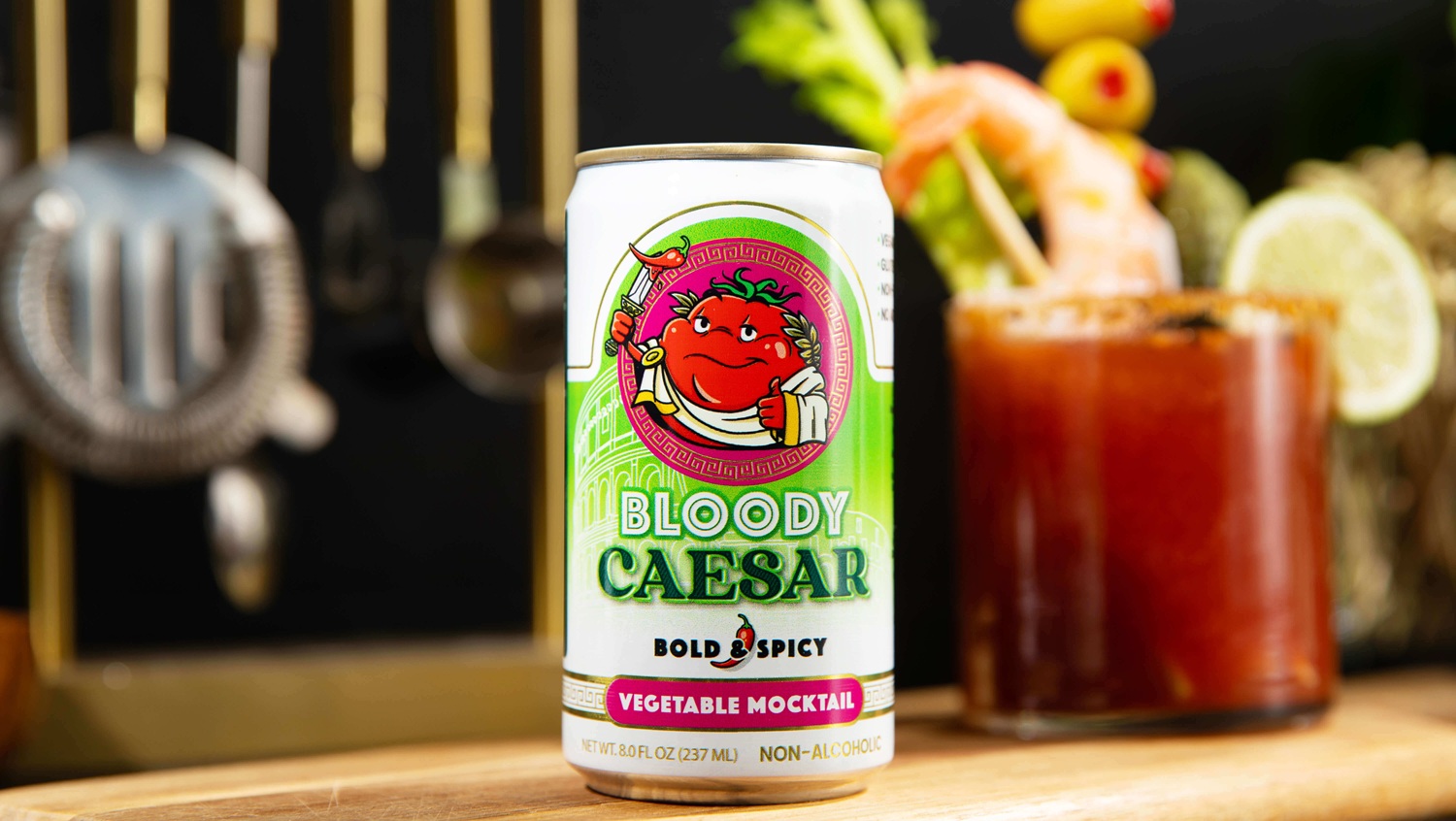
Who knew the infamous Bloody Mary had a Canadian cousin?
Well, if you’re married to a Canadian, like beverage entrepreneur David Page, you quickly learn about this national favorite, whether you like it or not.
Enter the Bloody Caesar. Similar to its American cousin in all but one detail – it uses Clamato juice, tomato and clam broth, instead of plain tomato juice.
Page admits he was once a naysayer, referring to himself as a “stubborn American guy,” but he’s since righted his ways and has been a Bloody Caesar advocate ever since.
After making the unique cocktail for his friends for years, and receiving favorable reviews, Page toyed with the idea of bringing the Bloody Caesar to the U.S. and soon created the Caesar Beverage Company.
A Mocktail in the Making
Boosting a 50+ year history in Canada, the Bloody Caesar is ingrained in the Canadian dining and beverage culture, but like Page originally, Americans have been slow to adopt the cocktail, potentially due to the inclusion of clam juice.
“I decided to overcome the clam juice barrier by removing it from the beverage,” says Page. “I also removed any additives or preservatives and used only natural ingredients.”
And the result? The Bloody Caesar vegetable mocktail. The 8-oz. canned drink offers a new twist on a Bloody Mary and can easily be made into a cocktail. Plus, with a lighter base than tomato juice, there’s no mealy taste to the beverage, only more refreshment.
Page’s mocktail is vegan, gluten-free and non-fat. He says most consumers enjoy drinking Bloody Caesar during the day at brunches and tailgates, at the beach or on a boat.
A Fruitful Partnership
Page did not launch the Bloody Caesar all on his own, however.
While seeking beverage formulation experts on the east coast, Page discovered Operations Manager Joe Hildebrand at NC Food Innovation Lab online. Hildebrand connected Page with Food Scientist Chloe Soliman, who Page calls “an absolute rock star.”
“Right from the beginning, the experts in the room worked with me, the entrepreneur, to establish a baseline product through the practice of trial and error,” says Page. “For example, we first used a soy tamari, switched to a non-soy tamari, and than made a final switch to a 50% less sodium light soy tamari.”
Based on Page’s feedback, the team created samples for him to conduct surveys and focus group tastings, discerning whether the product was “too sweet, too salty or too spicy.”
Page particularly enjoyed his in-person visit to the NCFIL facility in Kannapolis, North Carolina.
“It was such a fun day for me. I ‘geeked out’ on all the processes and on learning from really bright people,” Page says. “We did tastings and quick batches, achieving weeks – if not months – of work within one day.”
Hildebrand and Soliman also introduced Page to ingredient sourcing and co-manufacturing companies.
Page secured a co-manufacturer near his home in Boston and reports the “ingredient folks” have helped him with the pilot and first stages of production.
“I’ve found that people in the beverage industry lean in to support the next guy,” he says. “I think a lot of that comes from the brewery business. They look at each other more as family than competition.”
Seeking Early Adopters
While Page has started distribution, the uniqueness of his beverage presents some educational challenges.
“When the product is brand new, it’s hard to get early adopters,” he says. “Therefore, I host sampling events, in which I distribute Bloody Caesar, so people can try it and enjoy it.”
As a premium product, Page anticipates the mocktail landing in high-end clubs, restaurants, and liquor and food stores. He launched the Bloody Caesar as a mocktail, currently a large consumption group, but it can also become a cocktail with some simple mixing.
Once the Bloody Caesar gains some momentum, Page will consider expansion, with potential products like a spicy rimmer, a vodka-based cocktail or a Michelada, already popular in Mexican culture.
The Bloody Caesar debuted at this year’s SFA Summer Fancy Food Show and drew the attention of numerous brokers, distributors and retail outlets as a possibility to add to their line of mocktails.
“Our uniqueness as a ready-to-drink vegetable mocktail intrigues many in the industry, so my team is optimistic these collaborations will lead to new distribution channels,” says Page.
Positioned for Success
Soliman found Page a joy to work with because his objectives were clear from the onset.
“We could tell David had done his homework. Combined with NCFIL’s scientific expertise, we facilitated bringing his product vision to life,” she says. “David’s focus on details is apparent in the perfectly balanced flavor profile he curated in the Bloody Caesar.”
Has the Bloody Caesar piqued your curiosity? Follow for the refreshment.
- Categories: