
NCARS, NCFIL Strengthen Partnership to Advance Food Innovation
Amy Grunden’s favorite part of her current role at NC State University is when she helps to successfully secure resources that support the research programs for CALS 1,500 research faculty, graduate students and staff members.
As associate dean of research and director of the North Carolina Agricultural Research Service (NCARS), Grunden oversees the entire research enterprise for NC State’s College of Agriculture and Life Sciences (CALS). From fundamental to translational to applied research, she ensures CALS research supports growers, producers and stakeholders as well as citizens of North Carolina through NC State Extension.
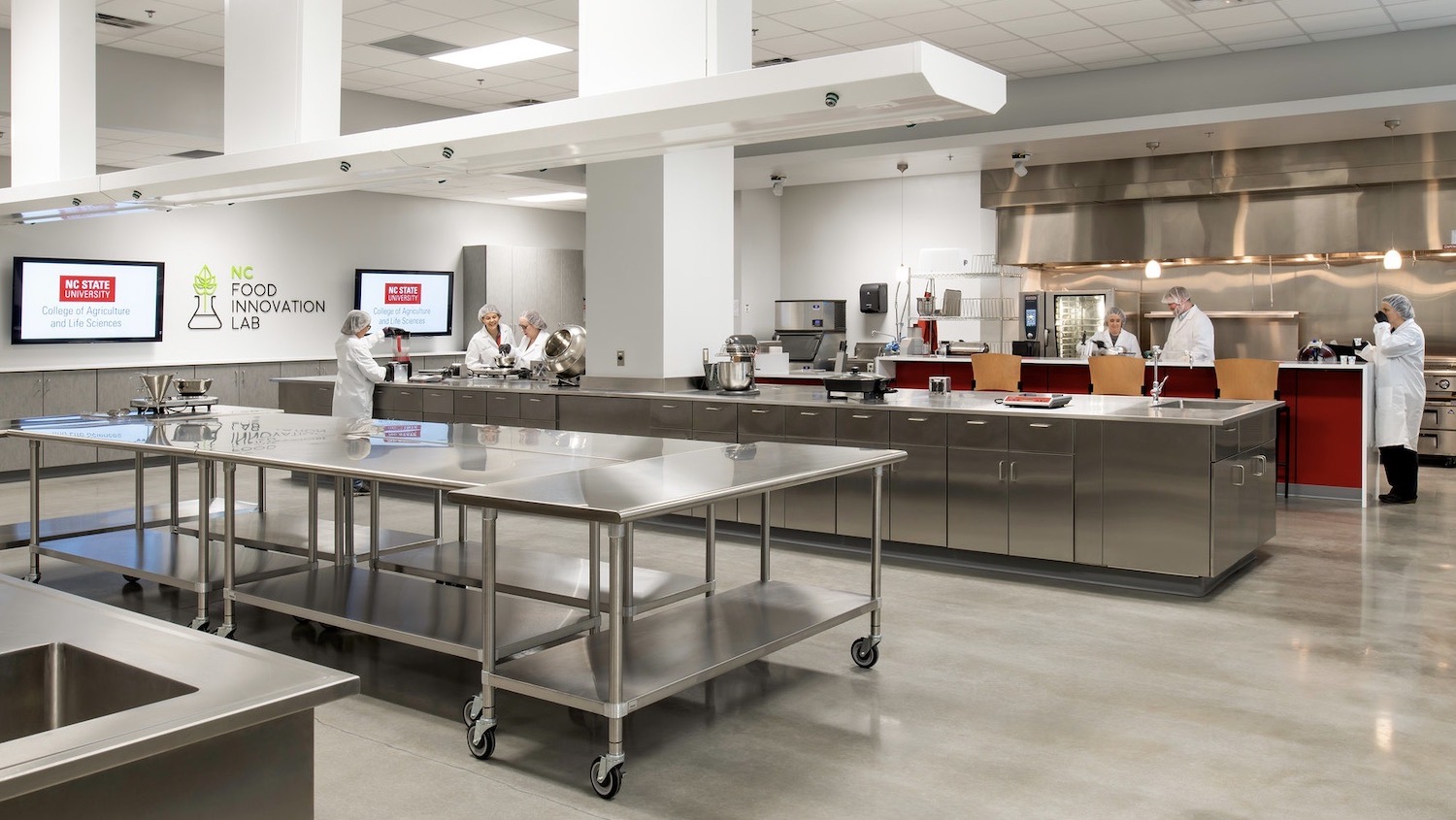
Within this research enterprise is the NC Food Innovation Lab (NCFIL), a cutting-edge research and development space in Kannapolis, North Carolina, accelerating food and beverage research, product development and commercialization.
Opportunities abound for NC State, CALS, NCFIL and NC State Extension to collaborate.
Supporting Agriculture Through Research and Extension
The CALS research ecosystem aims to future-proof agriculture and drive innovation in food security, Grunden explains.
“What we’re doing boils down to making sure that we are feeding people,” she says. “We strive to feed people, both locally and around the world, the highest quality food we can at prices that can be afforded.”
NCARS accomplishes this by meaningfully partnering with NC State Extension and purposefully building research teams to include Extension agents, so application of the college’s research stays at the forefront of why the research is being conducted.
“As a land-grant institution, we are responsible to all stakeholders,” Grunden says. “This includes internal stakeholders, like students, faculty and staff, as well as external stakeholders, like growers, producers, industry partners and citizens.”
Leading the CALS Research Enterprise
Gruden, who has been at NC State for over 25 years, manages many positions in her current role.
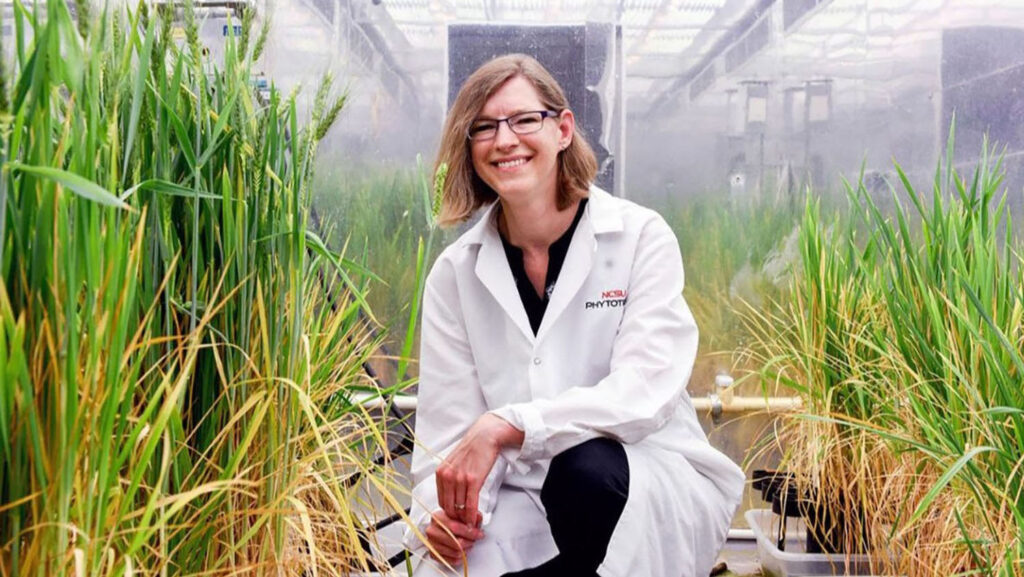
She oversees a lab in the Plant Sciences Building that focuses on microbial-based biotechnologies for resilient agriculture. As associate dean of research, Grunden ensures NCARS processes further program growth and, in conjunction with Executive Vice Chancellor and Provost Jim Pfaendtner and the Office of Research and Innovation, provides researcher support.
“I look to identify opportunities for collaboration across the college and ensure the growth of our research aligns with university goals,” she says.
As director of NCARS, Grunden oversees the research enterprise, including the research stations and organizations, like NCFIL and the Plants for Human Health Institute (PHHI) and coordinates with university leadership on collaborative efforts, such as the Bezos Center for Sustainable Protein. She also supervises the federal funds and grants for agricultural research.
“These efforts are all with the goal of ensuring every CALS researcher can do their best job,” she says.
Connecting CALS Research and NCFIL Expertise
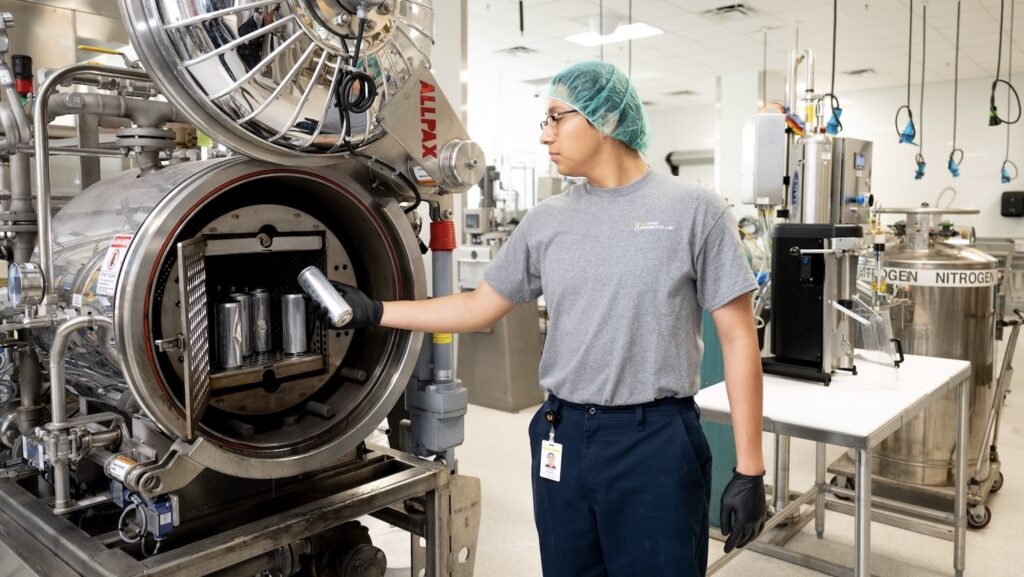
NCFIL helps CALS research by innovating nutritious, affordable foods and beverages and advancing solutions to food-related challenges.
NCFIL Interim Director Joe Hildebrand explains, “One of our current goals is to increase cooperation between NCFIL and NC State’s main campus, especially the Department of Food, Bioprocessing and Nutrition Sciences.” NCFIL’s facility has the technology and equipment to bring success to many CALS departments.
Grunden encourages partnerships with NCFIL and campus departments to identify research opportunities and then develop proposals. “I am excited to work with the NCFIL team to identify opportunities to secure funding for small companies, particularly through the Small Business Innovation Research and Small Business Technology Transfer programs,” she says.
She also identifies nutrient-dense food for future innovation, an area NCFIL can easily support. This partners well with Vice Chancellor for Research and Innovation Krista Walton’s work with the government in developing ready-to-eat meals for soldiers. The potential to work with NASA to support meals for astronauts also exists.
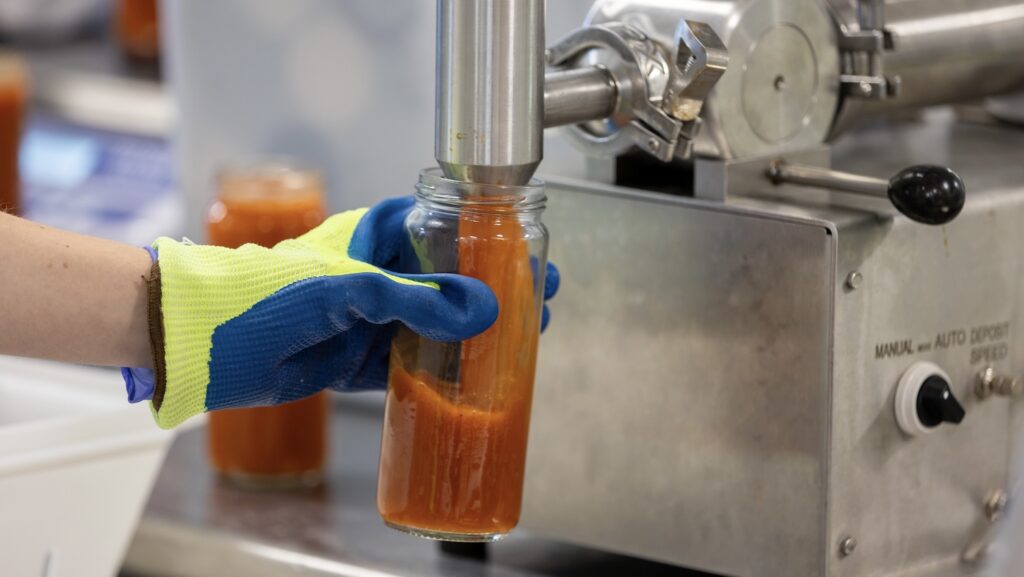
Additionally, specialty crops produced at many of NC State’s Research Stations could potentially serve as ingredients for food products developed at NCFIL. In fact, NCFIL used peaches from the Sandhills Research Station to process a peach puree for NC State’s Howling Cow ice cream last year.
“Part of NCFIL’s mission is to better understand the breadth of NC State’s research, so we can better support CALS researchers,” Hildebrand says.
Building the Future of Agriculture
Grunden remains focused on her goals: continue to future-proof agriculture; support the development of highly nutritious foods; and innovate to secure agriculture and food production for stakeholders.
“What I am trying to do in terms of building our research enterprise is being responsive to these needs,” Grunden says.
Hildebrand adds that NC State, CALS and NCFIL are in a solid position to achieve this because their expertise touches the entire food supply chain.
- Categories: