
NCFIL + Howling Cow: A Peachy Partnership
NC State University is known for its collaborative spirit.
And sometimes a story comes along that perfectly exemplifies the university’s unique collaborations – a story as juicy as a North Carolina peach.
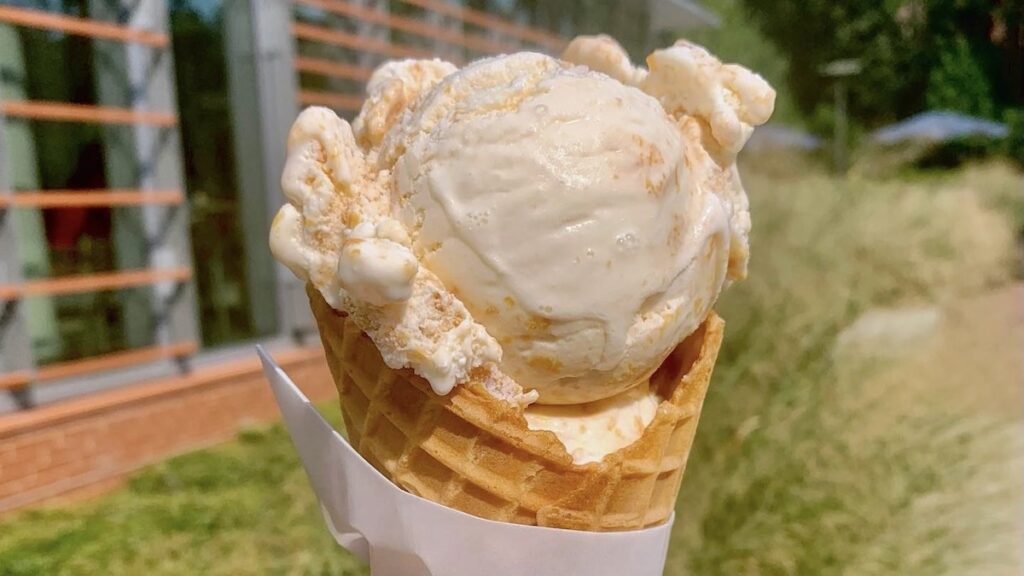
This story captures a NC State farm-to-fork (or spoon in this case) process and the special release of Howling Cow’s Sandhills Peach Carolina Gold ice cream. How sweet is that?
The partnership starts at the Sandhills Research Station in Montgomery County, connects with the NC Food Innovation Lab (NCFIL) in Kannapolis, N.C., and then travels to the Feldmeier Dairy Processing Lab at NC State, home of the Howling Cow brand.
And the final stop? Well, it all comes full circle when the most delicious peach ice cream lands in the bowls of NC State students and NC State Fair attendees from across the state.
Peach Partners: Sandhills + Extension
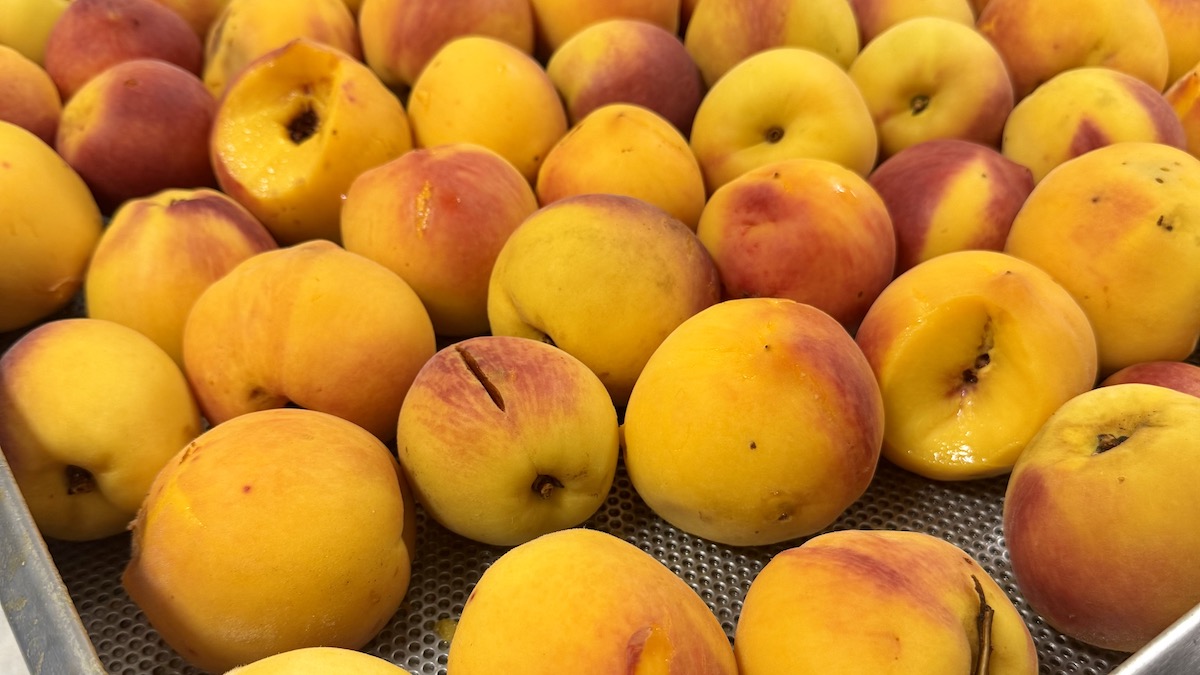
Sandhills Research Station is a 570-acre site in Montgomery County, one of 18 operated throughout the state by partners NC State University and NC Department of Agriculture and Consumer Sciences. The soil and climate at the Sandhills Research Station is particularly well-suited for growing peaches for NC State Extension researchers.
The researchers at Sandhills have developed over 20 peach varieties and investigate disease, weed and insect management as well as curate best management practices. They also provide recommendations to the state’s peach growers and have created a peach portal for information dissemination.
Often the varietals planted for fruit research produce excess peaches when harvested and do not have another purpose. And what better use for these extras than to create a premium ice cream ingredient!
Sandhills Peaches + Howling Cow History
NC State’s Dairy Enterprise System Director Carl Hollifield offers some background on Howling Cow’s annual production of peach ice cream.
With NC State for 22 years, Hollifield basically oversees all things dairy, noting he “manages a farm-to-fork dairy system, much like a produce processor.”
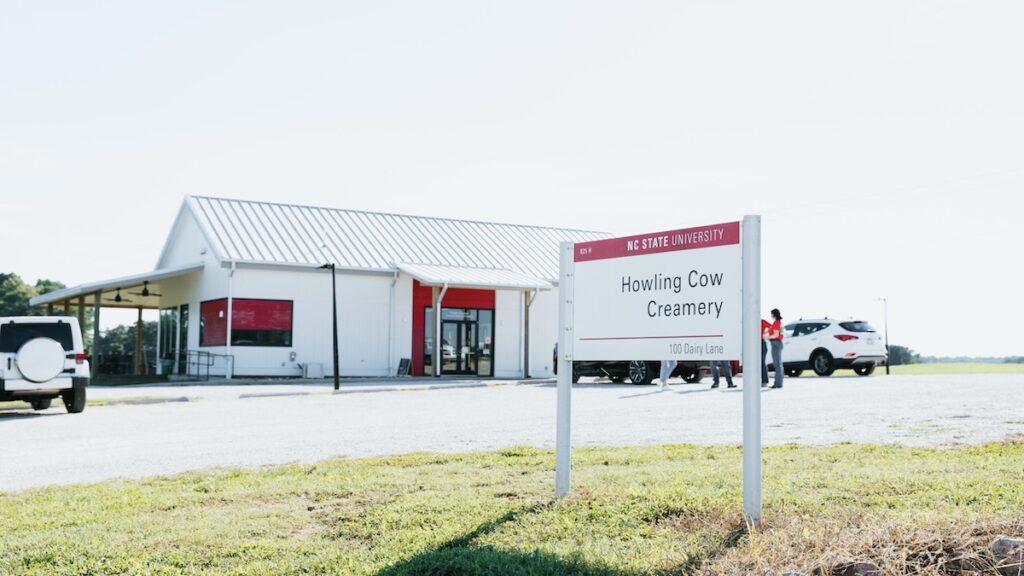
He supervises the NC State Dairy Research and Teaching Farm, the on-campus Feldmeier Dairy Processing Lab, the Howling Cow Dairy Education Center and Creamery, and the Rand Leigh Dairy Heritage Museum.
But perhaps most important to this story is Hollifield’s role as the lead for Howling Cow ice cream formulation.
In 2010, Sandhills Research Station started to bring the excess fresh peaches, originally grown for research, to NC State’s campus, and the small-batch peach ice cream was processed in the dairy plant for many years.
“It is a big process, involving the peaches being peeled, cut into pieces and then combined with sugars to help break down fibers,” Hollifield says. “This part ensures the peaches won’t end up like a big ice cube in the ice cream.”
When production in the dairy plant became too difficult, processing moved to University Dining’s commercial kitchen, where they would create a peach puree for the ice cream. Soon thereafter, the tradition of serving the Howling Cow’s peach ice cream at the on-campus All Carolinas Meal began and continues today.
NCFIL Enters Peach Process
Hollifield had been considering ways to partner with NCFIL, which he calls a “sister processing plant,” as the facility contains specialized equipment to process fruits.
He realized it made good sense for NCFIL, a cGMP regulated lab, to process the peach puree because they could issue a Certificate of Analysis (COA), which would allow him to use the puree in the ice cream for retail sale.
“NCFIL allows full regulatory compliance to create a product regulated for wholesale,” Hollifield says. “This is the first year Howling Cow is doing this, and we plan to sell the ice cream at the Talley Student Union and the NC State Fair.”
NCFIL’s Operation Manager Joe Hildebrand and his team had the fruit spec Hollifield needed – meaning the right sugar, spices and stabilizers – to take the raw peaches and create a puree perfect for making a high-quality ice cream.
The best news for Hollifield was NCFIL could make 1,000 pounds of processed peaches compared to the 100 pounds processed internally in years past.
“Having Joe’s expertise and the facility’s processing ability was the perfect way to process,” Hollifield says. “There’s a true science behind taking a fresh fruit and processing it in such a way that it will still have the right flavor and texture you want.”
NCFIL was able to achieve that.
NCFIL Pits + Preps Peaches
NCFIL was peachy keen on taking this assignment, but according to Hildebrand, it was “all hands on deck” when the peaches arrived and quickly reached the peak of their ripeness, but they were able to efficiently execute the task due to NCFIL’s equipment and team mentality.
“At our scale, manual processing of whole, ripe peaches works best as we can use the steam blancher to assist in removing the peels and then perform a quick manual pit extraction,” Hildebrand says. Then, it was on to producing the peach puree.
Following the team’s peach prep, the half-ton of peaches received from Sandhills Research Station was processed into a total of 1,000 pounds of peach pieces and puree. The puree was used for ice cream’s peach base flavor and the peach pieces for chunks in the ice cream. It was then sent to NC State’s Raleigh campus to complete the creation of Sandhills Peach Carolina Gold ice cream.
While Howling Cow Creamery has 18 full-time employees, 70 students also participate in the entire system process, from milking cows and making ice cream to scooping ice cream and leading tours.
So, this process came full circle – starting with NC State Extension researchers, then to NCFIL food scientists and landing at NC State, to engage and educate students, faculty and staff.
Fruits of Our Labor
Hollifield sees “the sky as the limit” when it comes to the variety of fruits that could be successfully processed at NCFIL.
“This is a fantastic partnership for now and the future as NC State researchers, from the coast to the mountains, conduct research on all different sorts of fruit that could be processed,” Hollifield says.
Hildebrand labeled this peach process a “cooperative triangle” as the research station donated NCFIL fruit to process, and NC State provided the location to produce the finished product.
“And we all get to enjoy the ‘fruits’ of our labor,” Hildebrand says.
And it’s not just NC State Extension, NCFIL, Howling Cow and NC State students who benefit from this collaboration – the end result is certain to soon sweeten the experience of NC State Fairgoers from across the state.
When will you get your scoop?