
Food Safety Trends, Trainings, and What’s Ahead at NCFIL
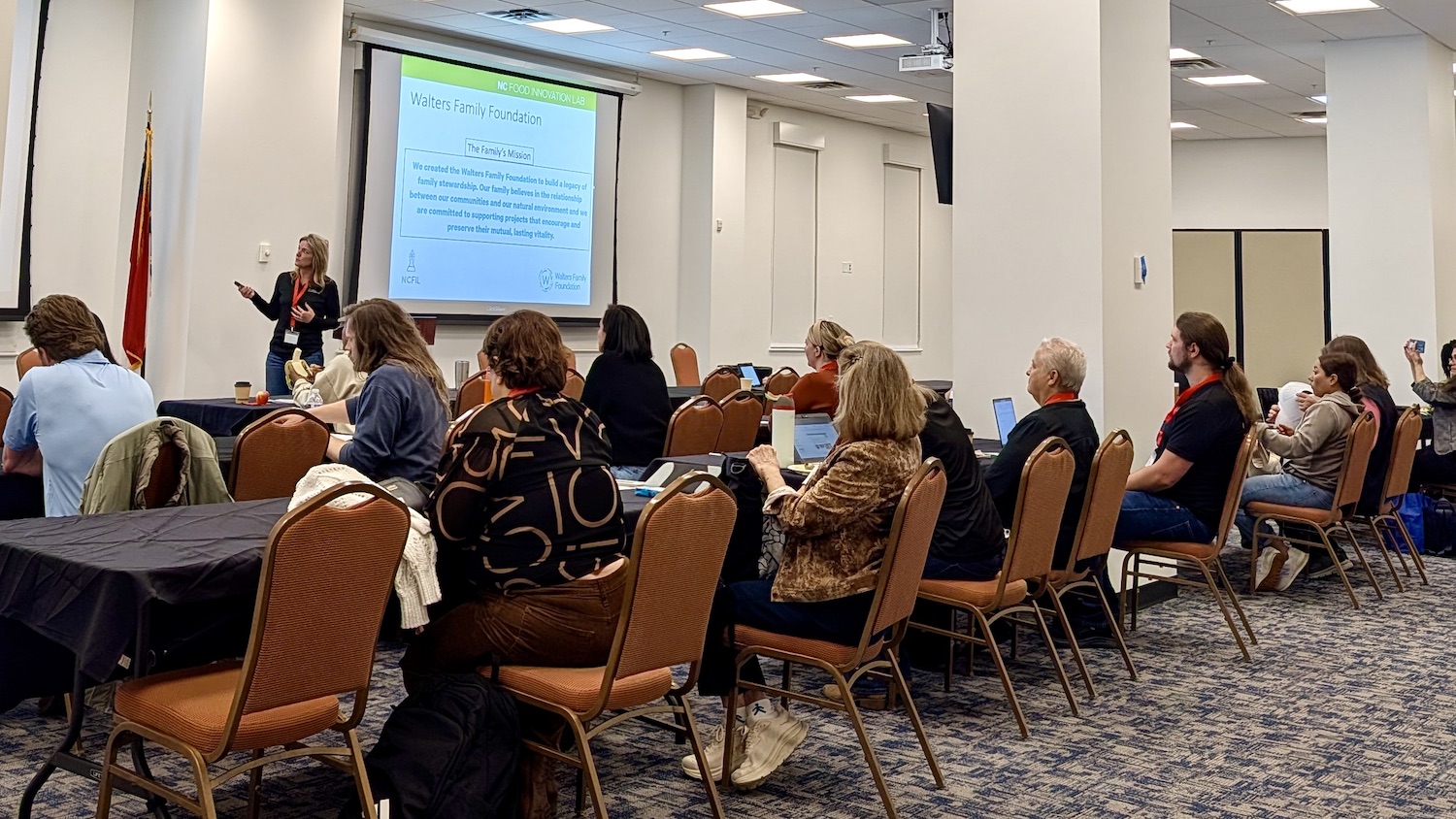
Food safety continues to evolve — and so does the NC Food Innovation Lab (NCFIL).
Through new technologies, expanded food safety training programs and active industry collaboration, NCFIL is helping food businesses across North Carolina navigate a constantly-changing regulatory and scientific landscape.
At the center of these efforts is Food Safety Manager Robert Price, whose work bridges hands-on facility operations with education and industry engagement.
Strengthening Food Safety at the Facility Level
With support from an expanding team, the NCFIL is enhancing its environmental monitoring program and strengthening sanitation protocols across the facility.
State-of-the-art microbial detection technology — via tools like BactoScan — allow for more precise surface evaluation to distinguish between harmless debris and potential contamination risks. This kind of rapid, visual feedback supports more proactive cleaning and validation processes, improving product safety for consumers and manufacturers.
Optimizing with AI
Another emerging trend shaping the industry is the application of artificial intelligence (AI). While still in its early stages, AI shows promise for assisting food safety professionals with documentation and foundational food safety plans.
“It cannot do our jobs,” Price says, “but as a tool, it can help us.”
For many in the field, the goal isn’t to rely on AI, but to understand how it can enhance existing processes without compromising accuracy or compliance.
Preparing for the Future of Food Traceability
Traceability remains one of the most significant regulatory developments on the horizon. New federal requirements are expected to take effect in 2028, giving companies time to strengthen their systems for tracking ingredients from source to final product.
The importance of traceability becomes especially clear during recalls. Without accurate records, identifying the source of contamination can take valuable time, delay response efforts and increase risk.
To navigate this change, NC State University is offering training programs that help companies build compliant systems that track products both forward and backward through the supply chains.
Potential Changes to GRAS Determinations
Proposed changes to how ingredients receive a GRAS (Generally Recognized as Safe) determination may alter future R&D timelines. Currently, companies are allowed to self-affirm ingredient safety, but regulatory oversight may shift to the FDA.
While most NCFIL clients rely on established GRAS ingredients, any changes could impact product development, particularly for companies introducing new ingredients. NCFIL continues to support clients through early-stage R&D and is prepared to guide them through testing and regulatory considerations if requirements do eventually evolve.
Food Safety Training Opportunities
Education is a cornerstone of NCFIL’s mission as evidenced by the recent completion of the inaugural NCFIL Entrepreneur Bootcamp. In partnership with university and industry leaders, the Lab is offering a growing lineup of training programs designed to meet businesses where they are, whether in ingredient, research and development or food safety.
On January 29th, NCFIL partnered with NC State’s Department of Food, Bioprocessing, and Nutrition Sciences (FBNS) to offer a one-day Food Safety School, a crash course designed to familiarize small business owners and value-added food businesses with North Carolina regulations, microbial control and food safety system development.
“I covered the regulatory side of things: deviations, recalls, traceability … all of the things that companies need to know to make sure they’re in compliance,” Price says.
Ongoing educational opportunities through NCFIL include Retail HACCP (Hazard Analysis Critical Control Point), Frontline Employee Training, and bootcamps on general food safety regulatory pathways.
In May 2026, NCFIL will host the Carolinas Association for Food Protection (CAFP) Spring Meeting. “Our mission is to advance food safety in the Carolinas by providing networking opportunities, sharing resources and promoting professional development,” shares Price, a member of the Executive Board.
This spring’s topic, The Future of Food Protection: Policy, Pathogens, and Professional Growth, will bring together experts, including Dr. Mark Moorman (retired, FDA), Lee-Ann Jaykus (Professor of Emerita, NC State) and Donald Schaffner (Distinguished Professor and Extension Specialist in Food Science, Rutgers University).
A Future Driven by Science
From new detection technologies to evolving regulations and expanded training programs, NCFIL continues to occupy a forward-looking role in the safety and development of food products in North Carolina.
As technology advances and the industry grows more complex, one thing remains clear: collaboration and education will be essential to keeping food systems compliant, efficient and innovative.
- Categories: