
Verley Partners with NCFIL to Advance Functional Dairy Proteins
When Verley founders Hélène Briand and Stéphane Mac Millan were introduced to then NCFIL Executive Director Bill Aimutis, they felt confident NCFIL could support them in formulation decisions and future customer discussions.
Based in Lyon, France, Verley is a young biotechnology company focusing on functional dairy proteins. Briand and Mac Millan knew NCFIL was recognized for expertise in ingredient design, evaluation and formulation as well as developing clean-label ingredients or proteins with enhanced nutritional performance.
“Their scientific approach and industry relevance made them a natural partner for us,” says Briand.
Meeting the Protein Demand
Verley was founded in 2022 by Briand, an agroeconomic engineer and consultant, and Mac Millan, an entrepreneurial business expert. The company now has around 40 employees and is growing.
Verley uses precision fermentation techniques to create functional dairy proteins, which complement conventional farming practices.
Precision fermentation is a technology that has been in existence for decades, but Verley employs a new application for this project – using this technology to enable the production of dairy proteins without the need for animals, which significantly reduces the ecological footprint of dairy production.
Therefore, Verley provides their clients with sustainable ingredients to create dairy products that are not only nutritionally rich but also environmentally conscious, reports Verley’s Head of Marketing Thibaut Elijah Lafargue.
“Our mission is not to replace cows and farmers but to fill the protein gap without putting too much burden on the environment,” says Lafargue. “We do not aim to be a new dairy, only a complementary ingredient. We aim to protect farmers and protect the environment.”

Innovative Solutions in Functional Dairy Proteins
There’s a growing deficit of protein in the market. In fact, according to Lafargue, in various world regions, such as Europe, dairy production is stagnating or even decreasing while protein demand simultaneously booms.
Just adding more cattle brings an environmental impact. And consumers have not always been pleased with current plant-based dairy solutions because they may not have the same taste, characteristics or nutrition and do not bring the same solution as conventional dairy proteins.
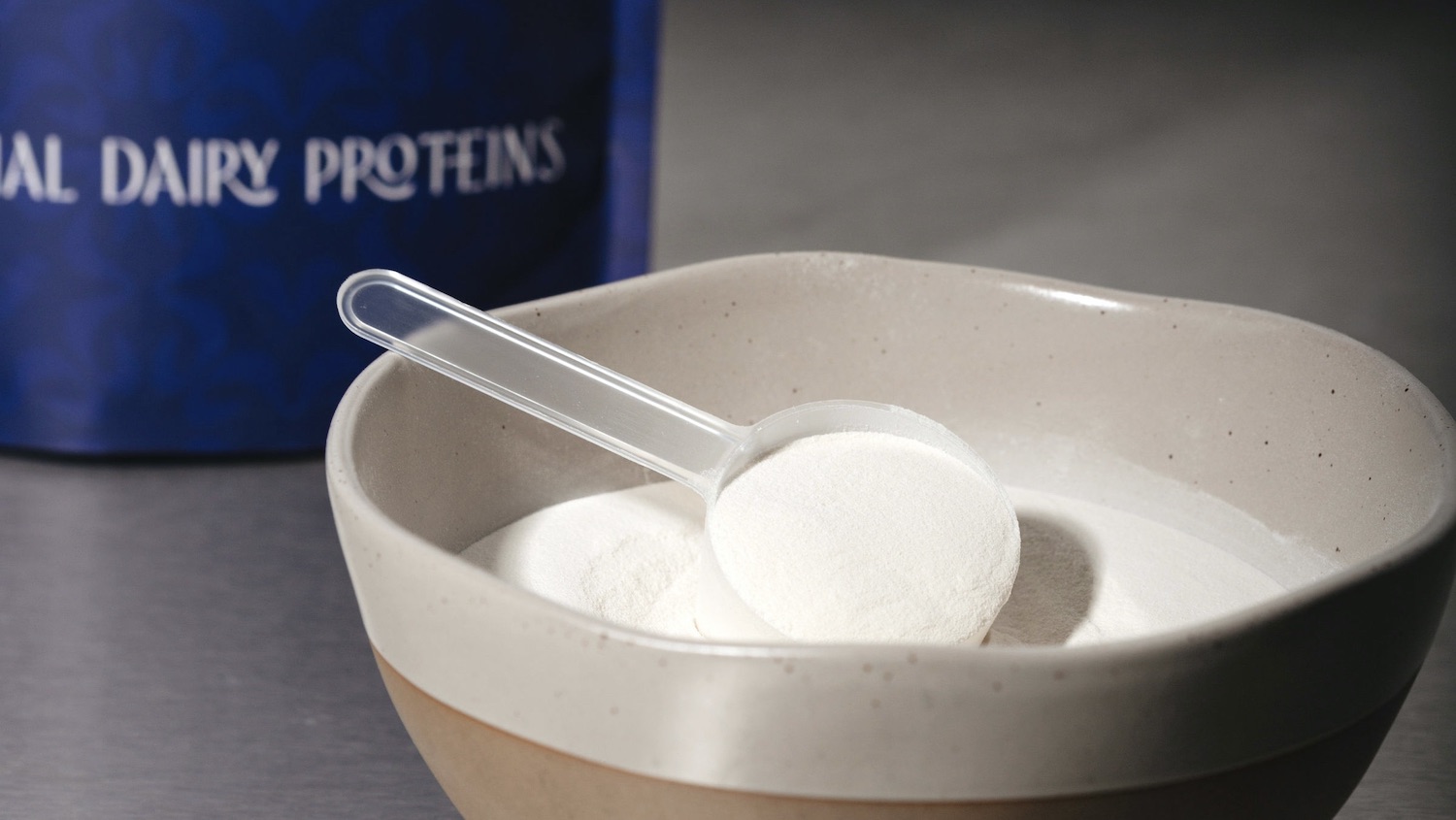
Verley aims to change this. Enter precision fermentation. Verley uses this technology to produce a pure, functional dairy protein powder. They also apply treatments to the powder to give it additional functions and characteristics.
Currently, they are allowed to launch and market four ingredients, each with different applications.
Lafargue also explains that sustainability is a main perk of precision fermentation.
“When you compare production of conventional dairy proteins to Verley’s fermentation technology, you see a 72% decline in greenhouse gas emissions, an 81% reduction in water consumption and a 99% reduction in use of arable land,” he says.
NCFIL Supports Ingredient Formulations, Product Confidence
Briand and Mac Millan worked closely with NCFIL Research Technician Candance Smith, under the supervision of NCFIL Director Julie Mann and Aimutis.
“The NCFIL team worked hand-in-hand with Verley to characterize their range of products and confirmed their unique value propositions,” says Mann. “In addition, we developed a white paper to assist in translating the science to descriptors and terms meaningful for industry conversations.”
NCFIL helped Verley confirm the claims of their complementary dairy proteins , in terms of characteristics and nutritional profile, and supported their functionalization, giving them proof points and analyzing their ingredients.
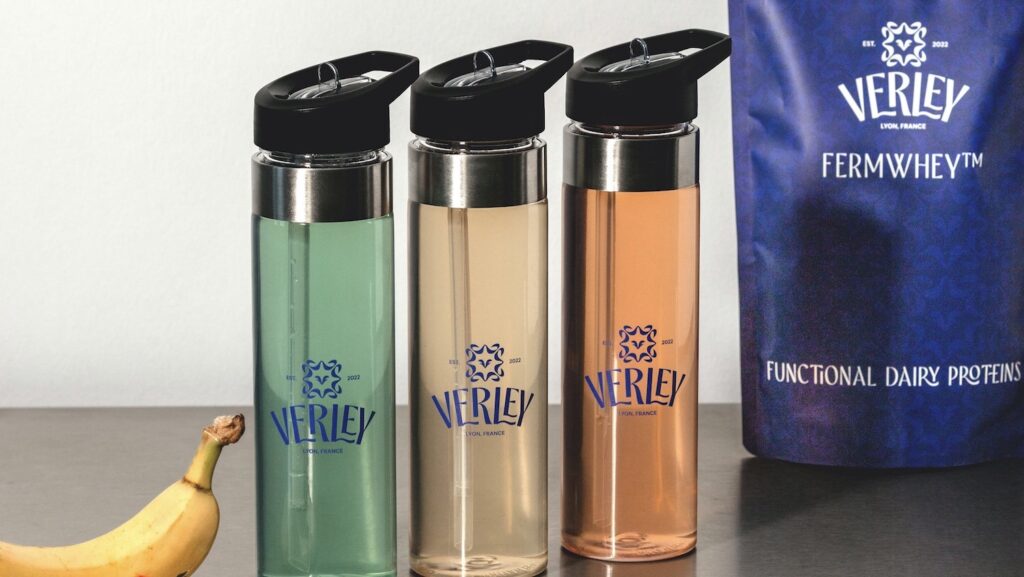
“NCFIL supported Verley in the functional evaluation and benchmarking of our FermWhey™ proteins against conventional dairy and plant-based proteins,” says Briand.
Specifically, Smith helped Verley identify functional strengths and differentiate their offering for the U.S. food industry.
Briand explains the work focused on how Verley’s proteins behave in representative food matrices. This allows her team to know how the proteins will perform in real food applications and enables them to provide future customers with third-party data.
According to Briand, having independent, science-based validation of their FermWhey™ protein range is extremely valuable, both internally and for their customers. Therefore, she feels confident opportunities for Verley to continue its relationship with NCFIL are on the horizon.
“The next step would be to co-develop finished recipe prototypes with NCFIL, incorporating our proteins, demonstrating advantages in texture, nutritional quality and clean-label formulation in real end products,” says Briand.
Verley: The Next Generation of Dairy Proteins
Verley currently has collaboration contracts with several industry players as they scale up production for more volume. They will commercialize in 2026, with the United States being their first market.
“We have been cleared for regulatory proposals in the U.S.,” says Lafargue. “We are pursuing regulatory approval for additional markets in Europe, the Middle East and Asia.”
Verley also just announced their Series A, its next round of funding, with $38M, which will spur efforts for more commercialization in the second half of 2026.
Smith is confident in Verley’s future success in the alternative dairy space.
“Consumers are looking for alternatives to traditional dairy products that are more sustainable and environmentally friendly,” she says. “Verley has introduced just that.”
- Categories: